How to Choose the Right Desert Buggy for a Dubai Trip
Understanding the Desert Buggy Options in Dubai
Dubai's desert landscape is a mix of towering dunes, flat gravel plains, and winding trails. A desert buggy, often called a sand dune buggy, is a popular way to explore this terrain. But not all buggies are the same, and picking the right one can make the difference between a memorable outing and a frustrating one. This guide breaks down the key factors to consider when you look for a buggy desert Dubai experience, from the type of vehicle to the practical checks you should make before heading out.
Step 1: Decide on the Type of Buggy You Need
The first decision is about the kind of buggy that suits your purpose. Desert buggies generally fall into two categories: recreational buggies and performance buggies. Recreational models are built for comfort and stability. They usually have a wider wheelbase, softer suspension, and a lower top speed. These are ideal if your main goal is to enjoy the scenery, take photographs, or travel with someone who is new to off-road driving. Performance buggies, on the other hand, are lighter, faster, and designed for more aggressive dune riding. They often have a higher power-to-weight ratio and a tighter turning radius. If you plan to tackle steep dunes or want a more thrilling ride, this type is worth considering. However, they require more skill to control, especially on loose sand.
Step 2: Consider Seating and Capacity
Think about how many people will be in your group. Most desert buggies are two-seaters, with the driver and one passenger sitting side by side or in a tandem arrangement. Some models offer a second row of seats, allowing for up to four or six passengers. If you are traveling alone or as a couple, a two-seater is practical. For a family or a group of friends, a larger buggy may be more comfortable. Keep in mind that a heavier buggy will handle differently on dunes. It may sink more in soft sand and require more power to climb. Also, check the weight capacity of the buggy. Overloading affects stability and braking distance. Always confirm that the buggy you are considering can safely carry your group plus any gear you plan to bring, such as water, cameras, or a small cooler.
Step 3: Assess the Engine and Power Source
Desert buggies are powered either by petrol engines or by electric motors. Petrol buggies are the most common in Dubai. They offer long range and quick refuelling, which is useful for a full-day excursion. They also produce a familiar engine sound that many riders enjoy. On the downside, petrol engines generate heat and noise, and they require regular maintenance, especially after a dusty ride. Electric buggies are quieter, produce zero exhaust fumes, and have a lower centre of gravity because the batteries sit low in the chassis. This can improve stability on side slopes. However, their range is limited by battery capacity, and charging takes time. For a typical half-day desert trip, a well-charged electric buggy may be sufficient. For longer outings, a petrol model is usually more practical. When evaluating a buggy, ask about the engine size or motor power. A larger engine (e.g., 800 cc or above) provides more torque for climbing dunes, while a smaller engine (around 500 cc) is adequate for flatter trails and gentle slopes.
Step 4: Evaluate Safety Features
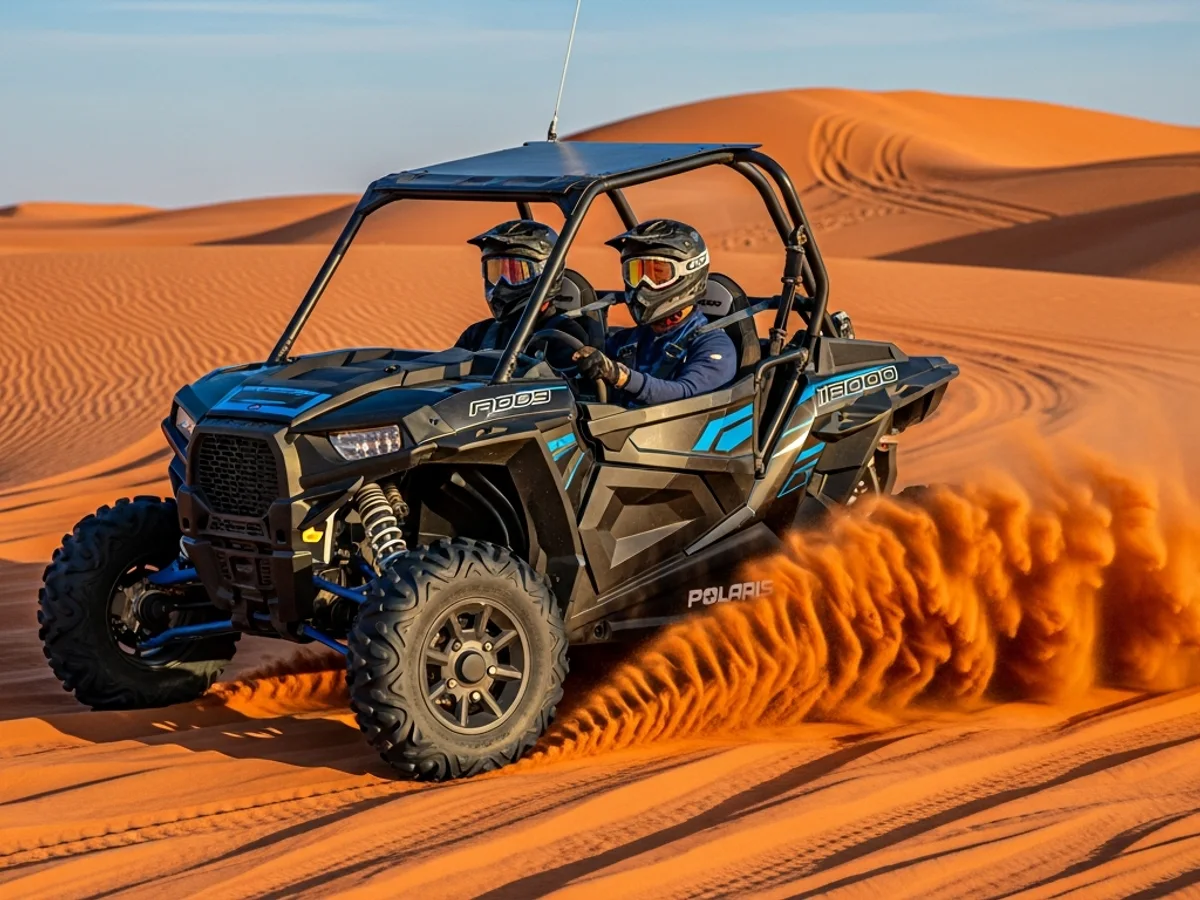
Safety should be a top priority when choosing a desert buggy. Look for a robust roll cage that surrounds the occupants. This structure protects you if the buggy tips over, which can happen when riding on steep dunes. Seat belts are essential. A four-point or five-point harness keeps you securely in place. Some buggies also have a kill switch that stops the engine if the driver is thrown from the seat. This is a valuable feature. Check that the buggy has adequate suspension travel. Good suspension absorbs the shock of uneven terrain and reduces the risk of losing control. Tyres matter too. Wide, low-pressure tyres with a deep tread pattern provide better grip on sand. Narrow or worn tyres can cause the buggy to slide or get stuck. Also, consider the braking system. Hydraulic disc brakes are more reliable than cable-operated brakes, especially when descending dunes. Before you set off, take a moment to inspect the buggy for any visible damage, loose bolts, or leaking fluids. If something looks off, do not take the vehicle out.
Step 5: Check the Driving Requirements
In Dubai, driving a desert buggy on public roads or in protected desert areas may require a valid driving licence. For most desert buggy excursions, a standard UAE driving licence is sufficient. If you are a tourist, check with the operator about their policy regarding international licences. Some may accept a valid licence from your home country, while others may require an International Driving Permit. Always confirm this before you book. Also, be aware of the speed limits that apply in the area. Some desert conservation zones have a maximum speed of 40 or 50 km/h to protect wildlife and prevent accidents. Buggies designed for high speed may tempt you to push the limit, but staying within safe bounds helps you react to unexpected obstacles, such as a sudden drop-off or another vehicle cresting a dune. If you are new to desert driving, consider taking a short orientation ride with an experienced guide to learn the basics of dune navigation, such as how to approach a steep slope and how to steer out of soft sand.
Step 6: Think About Comfort and Convenience
Spending several hours in a desert buggy under the Dubai sun can be physically demanding. Look for features that make the ride more comfortable. A sunshade or a roof provides essential protection from direct sunlight. Mesh seats allow air to circulate and reduce sweat buildup. Some buggies have a small storage compartment for personal items. If you are prone to motion sickness, choose a buggy with a smoother suspension and a less aggressive driving style. Also, consider the noise level. A very loud engine can be fatiguing over time. Earplugs or a helmet with a visor can help protect your hearing and keep dust out of your eyes. Bring plenty of water and wear lightweight, long-sleeved clothing to shield your skin from the sun. A good pair of sunglasses or goggles is also advisable because sand particles can be blown into your face even at moderate speeds.
Step 7: Match the Buggy to the Terrain
The type of terrain you plan to ride influences the ideal buggy choice. If you are heading to the deep dunes of the Liwa area, where dune heights can exceed 200 metres, you need a buggy with substantial power and a low centre of gravity. A lightweight performance buggy with a high power-to-weight ratio is best for climbing and descending steep slopes. For the more compact dunes around the Al Awir or Al Ain areas, a recreational buggy with good manoeuvrability works well. On flatter desert trails or gravel plains, any well-maintained buggy will do. Consider the possibility of wildlife spotting. If you are interested in seeing camels, oryx, or desert birds, a quieter electric buggy may help you approach without scaring the animals. The quieter operation also makes for a more peaceful experience overall.
Step 8: Verify the Operator and Vehicle Condition
Before you finalise your choice, spend time reviewing the condition of the buggy fleet. A reputable operator will keep their vehicles clean and well-serviced. Ask about the age of the buggies and how often they are inspected. Many operators offer a pre-ride briefing that covers the controls, safety rules, and the planned route. A good operator will also provide a two-way radio or a guide vehicle to stay in contact during the ride. Classicdesertsafari.com is one resource where you can find information about desert buggy options and guided tours in Dubai. The site lists various buggy models and includes details on safety equipment and driving requirements. If you are planning a trip, it is worth checking that resource to compare what is available. Remember that the best buggy for you is one that matches your skill level, your group size, and the type of experience you want. A comfortable, well-maintained buggy with appropriate safety features will let you focus on enjoying the desert rather than worrying about the vehicle.
Final Practical Checks Before You Go
On the day of your ride, do a quick walk-around. Check the tyre pressure; it should be lower than normal road pressure to improve traction on sand. Look for any cracks in the frame or seats. Ensure the fuel or battery level is sufficient for the planned route. Test the brakes and steering before you move. If the buggy has a GPS or a radio, make sure it works. Confirm that you have a map of the trail or that the operator provides a guide. Let someone know your expected return time, especially if you are riding alone. Desert conditions can change quickly, and visibility can drop during a sandstorm. Having a fully charged mobile phone in a waterproof case is a good idea, but do not rely on it as your only navigation aid. A simple compass or a paper map of the area can be a lifesaver if electronics fail. With these steps, you can confidently select a desert buggy that fits your needs and ensures a safe, enjoyable ride through Dubai's dunes.